

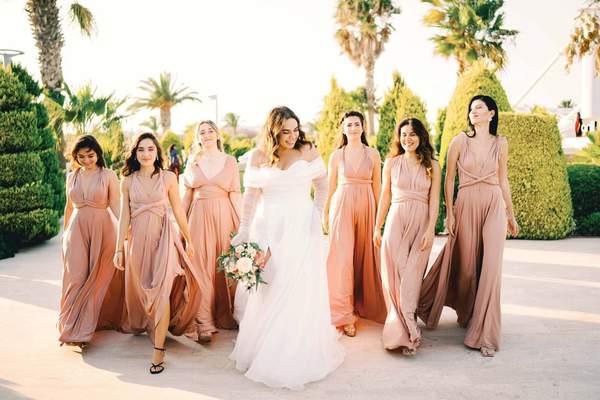
One bridesmaid wears a size 8 in jeans, another usually buys a 12, and both are staring at a dress chart that seems to tell a different story. That confusion is common, but it does not have to turn ordering into a gamble. Successful bridesmaid dress sizing starts with current body measurements, the specific designer’s chart, and a realistic plan for tailoring—not the number printed inside everyday clothes.
The goal is not to find a dress that needs no adjustments. It is to order one with enough room in the right places so a seamstress can make it comfortable and flattering before the wedding.
Why Bridesmaid Dress Sizes Feel Different
Formal dress sizing is not consistent across brands. Some designers use different measurement ranges, and a fitted satin gown behaves differently from a flowing chiffon dress. A size 10 from one retailer may correspond to different bust, waist, and hip measurements at another. Number labels are therefore a starting point, not reliable evidence of fit.
How to Measure for a Bridesmaid Dress
Use a soft dressmaker’s tape, a mirror, and ideally another person. Measure over close-fitting undergarments similar to those you expect to wear at the wedding. Stand naturally, breathe normally, and keep the tape level rather than pulling it tight. Record each result in the units used by the retailer.
Bust
Wrap the tape around the fullest part of your bust and across your back. Keep your arms relaxed and make sure the tape is horizontal. If your intended bra changes your shape or adds padding, measure while wearing it. For dresses with a built-in cup or an unusual neckline, check the retailer’s measuring instructions before choosing a size.
Natural Waist
Find the narrow area of your torso, usually between the lower ribs and your belly button. Bending gently to one side can help locate the natural crease. Measure there without sucking in your stomach. A snug waist measurement taken while holding your breath may produce a dress that is uncomfortable when sitting through dinner.
Hips
Stand with feet together and circle the tape around the fullest part of your hips and seat. This is particularly important for mermaid, trumpet, and other close-fitting skirts. An A-line skirt may allow more room through the hips, but never assume those measurements are irrelevant without checking the designer’s chart.
Length and Other Details
For floor-length gowns, retailers may request a hollow-to-floor measurement, total height, or both. These are not interchangeable. Follow the brand’s exact directions about shoes and where to start and finish the tape. Sleeve circumference, shoulder width, or upper-arm measurements may matter for particular designs. Write down your bridesmaid measurements twice and compare the results before ordering.
How to Read the Bridesmaid Size Chart
Open the chart attached to the exact dress, not an image saved from another store. Identify which listed size accommodates your bust, waist, and hips. Then review whether the retailer offers style-specific sizing advice. The largest size indicated by an essential fitted area is often the safest starting point, but the silhouette can change which measurement matters most.
For example, imagine your bust aligns with a size 8, your waist with a size 10, and your hips with a size 12 on the chosen designer’s chart. In a close-fitting column gown, ordering the 8 because it matches your usual clothing size could leave the skirt too tight. A 12 may provide necessary hip room, with the bodice altered later. For a loose A-line dress, ask the retailer whether the hip measurement changes its recommendation.
If you fall between two sizes, choosing the larger one is frequently more practical than hoping a smaller dress stretches. However, taking a garment in is not unlimited or automatically inexpensive; heavy beading, lace placement, and structured boning can make alterations complex. When in doubt, ask a seamstress or the retailer about that specific design.
Standard Size or Custom Measurements?
Custom sizing can help when your proportions differ significantly from the chart or you need a special length. Yet custom does not always mean finished-to-fit: a final fitting and small adjustments may still be needed. Verify exactly which measurements the seller accepts, what customization covers, and whether customized orders are returnable or changeable before paying.
Order With Alterations Already in the Plan
Before checkout, work backward from the wedding date. Confirm the current production or dispatch estimate, delivery destination, potential shipping delays, and whether a replacement would be possible. Do not assume a general ordering deadline applies to every brand or made-to-order dress.
Book a seamstress early enough to allow for a fitting and any follow-up visit. A practical target is to have the gown in hand several weeks before the event, with more time for elaborate alterations. Ask the tailor about availability rather than relying on a fixed universal timeline. Take the actual wedding shoes and intended undergarments to your fitting so the hem and bodice can be assessed together.
Common adjustments include hemming, shortening straps, taking in side seams, and refining the bust area. Letting out a gown is sometimes impossible if there is insufficient seam allowance, so it is risky to treat extra room as guaranteed. For a related planning checklist, browse our bridesmaid dress alterations guide before committing to a tight delivery window.
Small Checks That Prevent Expensive Mistakes
Check colour, length option, and any extra-length fees at the same time as the size. If wedding shoes have not been selected, ask the retailer how standard gown length is measured before making assumptions about the hem. A quick review of what to wear under a bridesmaid dress can also help you decide which bra to use during measuring and fittings.
Frequently Asked Questions
Should I order my normal clothing size?
No. Compare your current bust, waist, and hip measurements with the chart for the exact dress. Everyday clothing sizes and formalwear labels do not follow one universal standard.
What if my measurements match different sizes?
Focus on the areas where the gown is fitted, and ask the retailer or a seamstress for guidance. Ordering enough room for the largest critical measurement is often safer than relying on fabric to stretch.
Will a custom-size dress need alterations?
Possibly. Custom measurements can improve the starting fit, but hem length, straps, and bodice shaping may still require attention after the dress arrives.
When should I schedule my first fitting?
Contact a local alteration specialist before your dress arrives and reserve time based on its expected delivery. Allow several weeks where possible, plus extra time for complex fabrics or changes.
Choose the Measurements, Not the Label
Bridesmaid dress sizing becomes far less stressful when you treat the chart as a tool rather than a judgment about your body. Measure carefully, account for the dress’s cut, ask questions about uncertain fit, and leave room in the schedule for professional adjustments. That approach gives you a better chance of arriving at the wedding in a dress you can enjoy wearing—not just one you can zip up.
