

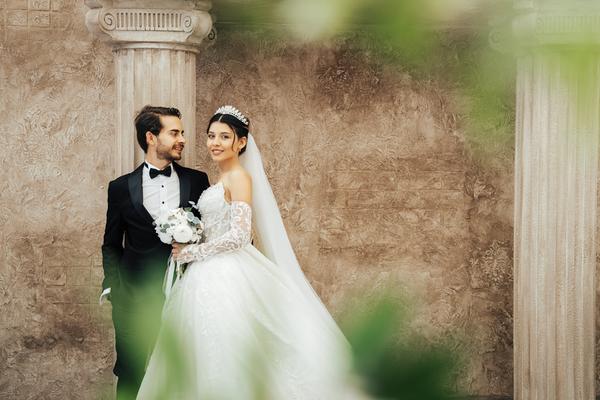
Sheath and column wedding dresses can look almost identical on a hanger: both are narrow, elongated silhouettes with little or no dramatic flare. Once you try them on, the difference becomes easier to feel. A sheath wedding dress generally follows the body more closely, especially through the waist and hips, while a column wedding dress tends to create a straighter, more architectural line toward the hem. Designers and bridal retailers sometimes use the terms interchangeably, so the label matters less than the dress’s actual cut, fabric, and construction.
Sheath vs Column Wedding Dress: The Quick Difference
Think “body-skimming” for sheath and “straight-dropping” for column. A sheath usually traces the natural outline of the torso and hips before falling relatively straight to the floor. A column gown is also slim, but it often maintains a more vertical line and may feel more structured through the skirt.
That distinction is not absolute. Bridal terminology varies by designer, and some gowns combine features of both silhouettes. Look at how the dress behaves on your body rather than relying only on the product name.
What Is a Sheath Wedding Dress?
A sheath wedding dress is a slim bridal silhouette designed to follow the body’s natural lines without the pronounced flare of a mermaid or trumpet gown. It is typically fitted through the bodice, waist, and hips, then continues downward in a narrow line.
Sheath gowns can feel soft and fluid in crepe, charmeuse, or lightweight lace, while firmer fabrics can make them look cleaner and more tailored. The defining impression is close-to-the-body continuity rather than volume. Brides comparing shapes may also find a guide to wedding dress silhouettes useful before deciding how fitted they want the gown to feel.
What Is a Column Wedding Dress?
A column wedding dress creates a long, relatively straight vertical shape. It may be fitted at the bodice, but the skirt generally drops with less emphasis on tracing every curve. Some column gowns have a defined natural waist, while others appear almost uninterrupted from neckline to hem.
Structure is often more noticeable in a column dress. Fabrics such as satin, taffeta, brocade, heavier crepe, or substantial lace can help the skirt hold a controlled line instead of collapsing closely around the hips and legs.
Where the Two Silhouettes Really Differ
Fit Through the Waist and Hips
The clearest distinction is how the dress relates to the body. A sheath tends to acknowledge the waist and hips more directly. A column can still be tailored, but its visual goal is often a clean downward line rather than an emphasized hourglass shape.
Skirt Shape
Both are narrow compared with A-line and ball-gown styles, yet a column skirt often looks straighter from hip to hem. A sheath may contour the upper thigh slightly before releasing.
Fabric Behavior
Fabric can change the silhouette as much as the pattern. A lightweight crepe sheath may move closely with the body and show a soft drape. A heavier satin column gown may hold away from the legs enough to preserve a statuesque shape. Watch how the material falls after you stop walking, not just how it looks in a posed mirror photo.
Movement and Comfort
A slim bridal silhouette does not automatically mean restricted movement. Comfort depends on skirt width, fabric stretch, lining, seams, slit placement, and alterations. Sit, walk, climb a few steps, and take a longer stride during your appointment.
A Real-World Try-On Example
Imagine two minimalist ivory gowns with almost identical strapless necklines. The first is soft crepe. It follows your waist, skims the hips, and moves with you when you turn. The second is a heavier satin with vertical seams and a skirt that drops almost straight from the waist. In person, the first reads more clearly as a sheath, while the second has the controlled, elongated character of a column wedding dress.
This is why shopping by silhouette name alone can be misleading. If you want something narrow but not a mermaid, ask to try both categories. You may discover that fabric and internal construction matter more to you than the terminology.
Which Style Might Suit Your Preferences?
Choose based on the effect you want, not rigid body-type rules. A sheath can be appealing if you like a close, natural line, softer movement, or a dress that subtly follows your shape. A column may suit you if you prefer cleaner geometry, less hip emphasis, or a more architectural look.
Venue and styling can influence the decision too. A fluid sheath can feel relaxed for an intimate ceremony, while a structured column can look striking in a modern hotel, gallery, or formal city venue. A guide to wedding dress alterations can help you understand how fitting changes affect the final line, while a wedding dress fabric guide can clarify the difference between soft drape and sculpted structure.
How to Tell a Sheath from a Column in the Fitting Room
Stand naturally and look at the dress from the front and side. Ask whether the skirt is tracing your hip and upper thigh or dropping more vertically. Then walk several steps and watch how the fabric responds. A sheath often moves more closely with the body; a structured column tends to preserve its straight outline.
Also ask how the designer classifies the gown and what alterations are typical. If a shop calls a dress a “sheath/column,” that is not necessarily an error. The categories overlap, and contemporary bridal collections often blur traditional definitions.
Frequently Asked Questions
Are sheath and column wedding dresses the same?
Not exactly, although the terms are sometimes used interchangeably. A sheath usually follows the waist and hips more closely, while a column generally creates a straighter line with less contouring through the skirt.
Is a column wedding dress looser than a sheath?
It can be, but not always. Some column gowns are closely fitted through the bodice and waist. The main difference is the vertical shape of the skirt rather than a guaranteed amount of looseness.
Which fabrics work well for a sheath wedding dress?
Sheaths can work in many fabrics, including crepe, lace, satin, and softer draped materials. The fabric determines whether the gown feels fluid, fitted, structured, or somewhere between those effects.
Is a sheath or column easier to move in?
Neither is automatically easier. Movement depends on skirt width, lining, stretch, slit, train, and alterations. Testing sitting and walking during the fitting is more reliable than judging from the silhouette name.
Final Thoughts
The difference between a sheath and column wedding dress is subtle but useful when narrowing down sleek bridal styles. A sheath generally skims and follows the body’s natural shape, while a column usually favors a straighter, more structured vertical line. Because designers do not use the terms with perfect consistency, treat them as starting points rather than strict rules. Try both, compare the fabric behavior and waist-to-hip fit, and choose the gown whose shape, movement, and comfort feel right for your wedding day.
