

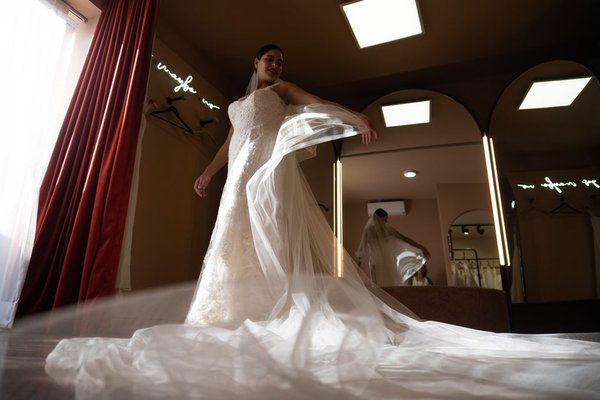
A wedding dress can look wonderful in a mirror and still need work before it feels right for an entire wedding day. A neckline may shift when you hug someone. A hem that looks perfect on a platform might catch your shoes when you walk. The most useful wedding dress fitting tips focus on the difference between a beautiful photograph and a dress you can comfortably wear.
Think of every appointment as a chance to give your alterations specialist better information. Consistent accessories, clear descriptions and realistic movement checks make adjustments more accurate and help prevent last-minute surprises.
Recreate your wedding-day outfit
The fit of a gown depends partly on what you wear underneath and on your feet. A different bra can change bust placement. Shapewear can change how fabric sits at the waist and hips. Even a modest change in heel height affects the hem of a floor-length skirt.
Choose your outfit foundations early, then bring the same pieces to each appointment. If you have not selected shoes, say so before the hem is finalized. A wedding shoes checklist can help you settle that decision before alterations begin.
What to bring to a dress fitting
Pack your intended wedding shoes, bra or bust support if needed, shapewear, and any detachable straps, sleeves or overskirt. Bring a veil, belt or statement accessory when its placement affects the neckline or waist. Reference photographs help explain a requested design change.
Consider bringing one trusted person, particularly someone who can learn the bustle. Too many opinions can make it harder to explain what you actually want. Ask the salon whether photographs are allowed and whether you need to bring the gown yourself.
Use the first fitting to agree on priorities
At the first wedding dress alterations fitting, the specialist generally assesses the bodice, straps, waist, hips and skirt, then pins or marks potential adjustments. The gown may look unfinished. Temporary pins show a proposed shape, not the final sewing result.
Explain how the dress feels as well as how it looks. Instead of saying, “The top looks strange,” try, “The neckline pulls away when I lean forward, but I do not want it lower.” This describes a specific problem and a boundary for the solution.
Ask which changes are straightforward and which could affect boning, lace placement or the original silhouette. For a redesign, discuss the trade-offs and price before agreeing. A wedding dress alterations cost guide can help you prepare questions about the scope of work.
At the second fitting, test the changes
By the second appointment, major adjustments should be easier to judge. Compare the results with your earlier requests. Does the bodice stay in place without pulling? Are the straps secure without digging into your shoulders? Do the waist and hip seams sit correctly?
Check the hem in your wedding shoes while standing naturally. Mention any grass, steps or uneven ground at your venue. A close-fitting skirt or train can behave differently outdoors than it does on a smooth salon floor.
If the gown has a train, discuss the bustle. Ask to see how it changes the back, how securely it holds and whether someone can fasten it without professional help. A guide to wedding dress bustle styles provides useful background for this decision.
Make movement part of every fitting
Bridal fitting tips often emphasize appearance, but movement reveals issues photographs miss. With the specialist’s permission, walk, turn, sit briefly, raise your arms and bend as though greeting guests. Be cautious around pins and unfinished hems; save fuller tests for when the dress is safely secured.
Imagine a strapless mermaid gown that stays perfectly positioned while standing but presses against your ribs at dinner. Discovering that during the second fitting creates an opportunity to discuss comfort without compromising the support the bodice requires.
Describe anything that shifts, scratches, pulls or restricts breathing. A secure fit should not require constant tugging. If you plan to dance, ask whether the skirt and fastened bustle will allow the movements you expect.
Communicate clearly between appointments
Before leaving, repeat the agreed changes and confirm what should be finished next time. Ask what the price includes, whether further revisions may cost extra and when the gown will be ready for collection. For complex work, request a written summary.
Keep your shoes and undergarments consistent. If you change heel height, shapewear or bra, contact the specialist promptly. A small change at home can affect work already marked or sewn.
Do not aim for a particular weight solely to fit your dress. Bodies fluctuate naturally. If your measurements change noticeably, tell the specialist rather than waiting until the final appointment. They can explain whether another adjustment or fitting is feasible.
Make the final gown fitting a rehearsal
Your final gown fitting is the time to inspect the finished dress with your complete outfit. Look at the front, sides and back in natural posture. Confirm that fastenings close smoothly, the neckline stays put and the hem allows safe movement. Sit and walk again instead of assuming every earlier concern has been resolved.
Have the person responsible for your bustle practice fastening and releasing it. Ask where its loops or buttons are located. Check that detachable pieces are included, then discuss safe transport, storage and fabric-appropriate wrinkle care.
Frequently asked questions
How many wedding dress fittings will I need?
Many brides have around three appointments, although simple alterations may need fewer and complex work may require more. The specialist should recommend a schedule based on your gown and the adjustments requested.
When should I book my first fitting?
A common starting point is about eight to twelve weeks before the wedding, once the gown has arrived. Reserve your alterations specialist earlier if possible, especially during busy seasons. Complex work may need a longer schedule.
What if I have not bought my wedding shoes yet?
Tell the fitter. Similar-height shoes can sometimes help with planning, but the final hem should be checked with the pair you intend to wear. Changing heel height later may mean another adjustment.
Should I speak up if something feels uncomfortable?
Yes. Identify the pressure, slipping or rubbing and the movement that causes it. The specialist can explain which changes are possible while preserving the gown’s structure.
A better fit starts with better feedback
Successful fittings are collaborative, not a test of how quietly you can stand in a beautiful gown. Bring the right pieces, repeat practical checks and ask questions while changes are still possible. Your dress should feel like yours and let you enjoy the wedding without constantly thinking about its fit.
