

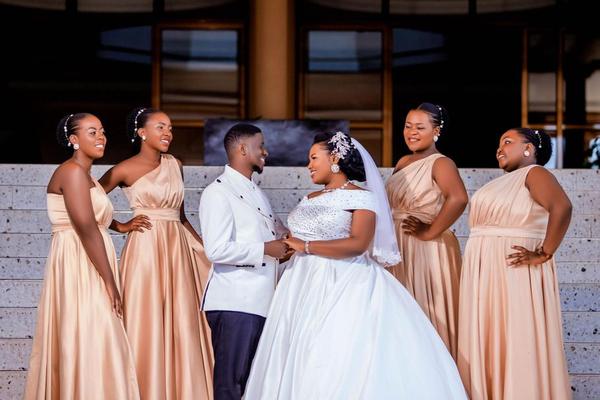
Champagne bridesmaid dresses look effortless in inspiration photos, but choosing the right shade takes a little more care than choosing a deeper color. Champagne can lean toward gold, pink, taupe, or pale beige, and some versions look surprisingly close to an ivory wedding gown. The goal is not simply to find a pretty neutral. It is to give the bridal party a distinct, flattering color that supports the bride’s look rather than disappearing into it. A few thoughtful comparisons can make the difference between a beautifully coordinated palette and dresses that clash in person or photographs.
Start With the Bride’s Dress, Not the Bridesmaid Swatches
Before ordering champagne wedding party dresses, identify the bride’s actual gown color. Bridal labels such as ivory, natural, cream, and champagne are not standardized across designers. An ivory gown might have a buttery base, a cooler white finish, or a blush lining beneath lace. Each produces a different relationship with the bridesmaids’ fabric.
Ask the bride for a fabric swatch if possible, especially when her gown has a colored lining. Place potential bridesmaid samples beside it rather than judging them separately on a shopping website. Look for visible contrast in both color and depth. If the fabrics almost merge at arm’s length, the bridesmaids may look too bridal in group photographs.
A Practical Color-Matching Example
Imagine a bride wearing warm ivory satin. A very pale, yellow-based champagne satin could read as nearly the same shade under soft reception lighting. A slightly deeper taupe-champagne in matte chiffon creates more separation without changing the elegant neutral mood. Alternatively, a soft rose-champagne might work if its pink tint complements, rather than competes with, the gown’s undertone.
This is also where a broader guide to bridesmaid dress color combinations can help you compare neutral palettes before committing.
Understand Champagne Dress Undertones
The word champagne describes a family of shades, not one fixed color. Pay attention to what you see beneath the beige or golden surface.
Warm Gold Champagne
Warm champagne carries honey, pale gold, or yellow notes. It can be lovely with creamy flowers and candlelit decor, but may blend with yellow-ivory bridal fabrics. Choose enough depth to keep the wedding party recognizable as a separate group.
Rose Champagne
A pinkish champagne feels softer and often pairs naturally with dusty rose bouquets. Check it beside blush-toned bridal linings, though: two almost-identical pink neutrals can be just as confusing as two ivories.
Taupe or Beige Champagne
Cooler champagne may feature mushroom, greige, or subtle brown notes. These shades can define the bridesmaids clearly beside a warm white gown. Compared with beige bridesmaid dresses, champagne styles sometimes have more sheen, but retailers use the labels inconsistently. Trust the swatch, not the product name.
For a cohesive look, choose one undertone family even if bridesmaids wear different cuts. Mixing a strongly yellow champagne with a distinctly pink champagne can appear accidental unless the full wedding palette deliberately bridges them.
Test Fabric and Lighting Together
Champagne changes character with texture. Glossy satin reflects light and can appear paler in bright spots and richer in shadow. Chiffon typically looks softer and more muted, while crepe has a smoother, less reflective surface. Velvet gives a deeper, more autumnal impression, although it is less common for lightweight summer styling.
Test samples in three settings: daylight by a window, warm indoor lighting, and a quick phone photograph with flash. Do not rely solely on a heavily edited product image. Hold the fabrics vertically, because folds and reflected light affect how a full-length dress will read. If the ceremony is outdoors but the reception is indoors, evaluate both conditions.
Pick Silhouettes That Feel Coordinated, Not Identical
Neutral bridesmaid gowns allow details such as necklines, draping, and texture to stand out. Matching dresses create a formal, symmetrical look; mixed silhouettes make room for individual comfort. Either approach works when the undertone and overall formality stay consistent.
For a mixed-style bridal party, agree on length, fabric family, and a limited shade range first. Then let bridesmaids choose from approved necklines or sleeve options. A floor-length satin slip dress beside a knee-length casual cotton dress may feel disconnected even when both are labeled champagne.
Use a bridesmaid dress fit and alterations checklist before placing orders. Straps, hems, and bust support often need more attention than the color selection itself.
Choose Shoes, Jewelry, and Accessories With Restraint
Champagne is already a delicate neutral, so accessories should add definition rather than compete with it. Metallic shoes are a natural choice, but match their temperature to the dress. Soft gold or brushed bronze works with warm champagne; muted pewter or understated silver can suit cooler taupe versions. Nude shoes can also work when their tone complements the wearer’s skin and the dress.
Jewelry is easiest when the bridal party agrees on a general metal finish without requiring identical pieces. Delicate earrings, a small pendant, or one bracelet is often sufficient, particularly with cowl necklines or beaded fabric. If the gowns are glossy, consider simpler jewelry so the overall look does not become overly reflective.
Let Bouquets Create the Color Contrast
Bouquets are a useful bridge between champagne dresses and the rest of the wedding. Against pale neutral fabric, flowers with some depth photograph more distinctly than arrangements made entirely of cream blooms. Dusty rose, mauve, terracotta, burgundy, or muted greenery can each work, depending on the season and venue.
A wedding bouquet color guide can be a useful next step once the dress swatches have been approved.
Build a Simple Approval Process Before Ordering
Decision-making gets complicated when every bridesmaid sees a different screen color. Nominate one person to collect physical samples and compare them with the bride’s gown. Photograph the approved swatch next to the bridal fabric in consistent light, then record the retailer, exact color name, fabric, and style options.
Frequently Asked Questions
Are champagne bridesmaid dresses too close to white?
Some are. Pale champagne can appear bridal beside ivory, especially in shiny fabric. Compare physical swatches with the gown and choose a deeper or more distinct undertone if the colors merge.
Can bridesmaids wear different shades of champagne?
Yes, provided the differences look deliberate. Keep the shades within a planned warm, rosy, or cool family, and use consistent dress length or fabric to tie the group together.
What color shoes go with champagne bridesmaid dresses?
Soft gold, bronze, taupe, and carefully chosen nude tones are versatile options. Cooler champagne may also pair with muted silver. Test the shoes beside the actual dress rather than assuming one metallic works with every shade.
Do champagne dresses suit daytime and evening weddings?
They can suit both. Matte, airy fabrics often feel relaxed in daylight, while satin and richer textures bring evening polish. Check the chosen color in the lighting guests and photographers will actually see.
Final Thoughts
The most elegant champagne bridesmaid dresses are not necessarily the palest or shiniest. They are the ones that flatter the wedding party, sit comfortably beside the bridal gown, and remain distinct in real lighting. Begin with the bride’s fabric, choose an undertone deliberately, and let accessories and flowers reinforce the palette. That small amount of planning gives this subtle color the definition it needs.
