

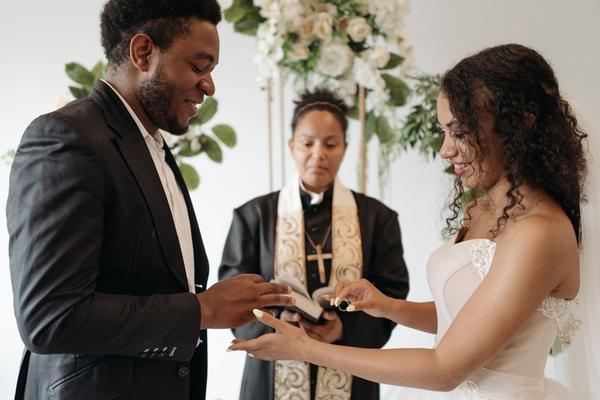
Choosing someone to lead your wedding feels personal. Before asking a close friend, booking a celebrant, or hiring a minister, though, there is a practical question: who can officiate a wedding legally where you plan to marry? The United States has no single nationwide officiant license. States decide who may perform marriages, while certain cities add registration requirements.
The key is separating two jobs: leading a meaningful ceremony and legally solemnizing a marriage. One person can often do both. In other cases, your preferred speaker needs special authorization, or a separate authorized officiant must conduct the legal ceremony.
Who Can Legally Officiate a Wedding?
Most states recognize certain religious leaders and public officials. The precise categories vary, however, so a job title, online certificate, or experience leading ceremonies does not establish legal authority everywhere.
Religious Leaders
Ministers, priests, rabbis, and other religious leaders may qualify under state law. The person’s role, religious organization’s authority, and ceremony location can all matter.
For example, Texas law authorizes licensed or ordained Christian ministers or priests, Jewish rabbis, authorized officers of religious organizations, and certain judges. California recognizes qualifying clergy under its Family Code without keeping a statewide clergy registration list. These differences are why couples should never assume one state’s rules apply elsewhere.
Judges and Civil Officials
Judges and designated government officials can conduct marriages when the relevant law authorizes them. Depending on the state, eligible people may include retired judges, magistrates, civil marriage commissioners, or certain elected officials. Not every courthouse employee or notary public qualifies. Ask the local clerk which civil officiants are available.
Friends, Relatives, and Professional Celebrants
A friend or relative can give readings, share memories, and guide your vows at a symbolic ceremony. Legally marrying the couple is different: that person must qualify under the applicable marriage officiant rules or obtain permitted temporary authorization.
Professional celebrants face the same distinction. A polished ceremony script demonstrates presentation skills, not necessarily eligibility to sign a marriage license.
Why Wedding Officiant Requirements Vary by Location
Marriage law is mainly state law, but local administration matters. The ceremony location usually determines which officiant rules to check. Your home address and your officiant’s home address do not settle the question.
New York City illustrates the difference. Its City Clerk generally requires eligible officiants to register before conducting a ceremony. The city also offers a separate one-day officiant license for a specific couple, exempt from ordinary officiant registration. A friend cannot simply arrive without obtaining the required authorization.
California has a different option: participating counties may appoint a deputy commissioner of civil marriages for a day, although programs and procedures vary by county. Texas does not require otherwise qualified officiants to register with the state.
Those are examples, not nationwide rules. Check the official marriage guidance for the exact location before making arrangements.
Can Someone Get Ordained Online and Marry a Couple?
Sometimes, but online ordination is not a universal permission slip. Recognition depends on state law, the organization involved, and local procedures. Some jurisdictions recognize qualifying religious officiants without government registration; others require documents or additional steps.
Before purchasing ordination credentials, ask which legal category would authorize the person to officiate. Then confirm that category with the marriage licensing office or officiant registration authority where the ceremony will occur. This avoids discovering a problem days before the wedding.
A Practical Example: Asking Your Best Friend
Imagine you live in New Jersey, your closest friend lives in Pennsylvania, and the wedding is in New York City. Neither home state automatically determines whether your friend can solemnize that wedding.
Instead, consult the New York City Clerk. Your friend may be eligible for a one-day marriage officiant license tied to your wedding, but must follow the city’s application process. The couple must obtain its marriage license before the friend applies for that one-day authorization. Check the required documents and instructions for returning the completed license.
That simple location-first approach is more reliable than asking whether someone is an officiant in general.
How to Confirm a Legal Wedding Officiant
Contact the county or municipal office responsible for marriage paperwork, giving the ceremony’s location and date. Ask which people can legally marry a couple there and what proof of authority is required.
Then check whether the officiant must register, present credentials, or obtain a temporary appointment. Ask about out-of-state officiants, too. Finally, confirm who signs the marriage license, whether witnesses are required, and when the completed document must be returned.
Marriage licenses have their own rules, including possible waiting periods and expiration dates. A qualified officiant cannot make an expired license valid just by leading a ceremony. A marriage license checklist can keep these details organized alongside your wedding ceremony timeline and plans for how to write wedding vows.
What Does the Officiant Do After the Vows?
A legal officiant’s work extends beyond the words spoken in front of guests. Depending on local law, they review the license, conduct the ceremony, complete required entries, and return paperwork to the proper office.
The return deadline differs by jurisdiction. California generally requires the officiant to return the completed license within 10 days; Texas allows up to 30 days. Follow the instructions issued with your own license rather than relying on a generic wedding checklist.
If someone special cannot legally officiate, they can still lead a symbolic celebration while an authorized person performs the legal marriage. Be clear about which event creates the marriage.
Frequently Asked Questions
Can anyone officiate a wedding in the USA?
No. Each state identifies who is authorized to solemnize a marriage. Some jurisdictions allow temporary authorization, but being an adult or being selected by the couple is not enough by itself.
Does an officiant need a license?
Not everywhere. Some jurisdictions require registration or special permission; others recognize qualifying religious leaders or officials without a separate officiant license. Always check the rules for the ceremony location.
Can a family member legally marry us?
Yes, if the family member has the required legal authority or obtains an available one-day appointment or license. Otherwise, that person can lead a symbolic ceremony while an authorized officiant handles the marriage.
Who files the marriage license after the wedding?
The answer depends on local law. In many places the officiant completes and returns the signed license. Confirm the deadline and procedure, and request a certified marriage record if you need one.
Choose Your Officiant With Confidence
The right person should understand your relationship and have the authority to make the marriage legally effective. Choose the voice you want at your ceremony, then verify the state law, local requirements, and paperwork deadlines. A few questions to the right clerk’s office can prevent a difficult surprise after the wedding.
