

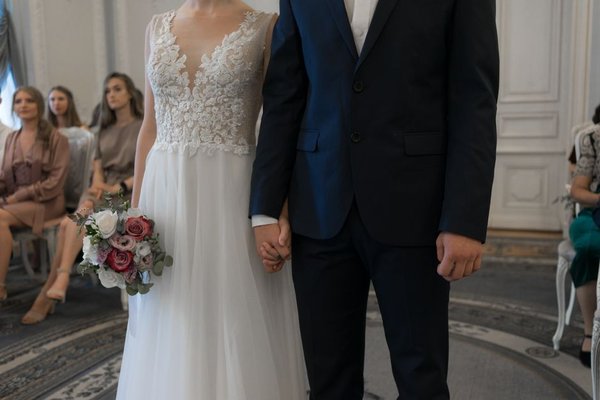
A wedding guest dress can fit through the bust and hips yet still look wrong on a shorter frame. Its waist might sit too low, its sleeves may cover your hands, or its “midi” hem might reach your ankles. Choosing petite wedding guest attire is about getting these proportions right, not following rigid rules about what shorter people can wear.
The best outfit feels comfortable, looks polished, and respects the invitation. Before choosing a colour or trend, look at the shoulder position, torso length, and hemline. Those details usually make the biggest difference.
Start With Proportion, Not the Size Label
Petite sizing generally adjusts garment lengths and placement for shorter frames; it does not automatically mean a smaller bust, waist, or hip measurement. Two people of the same height might need different sizes. Compare your measurements with the brand’s chart and check where the garment’s seams land.
For a petite wedding guest outfit, the shoulder seam should meet your natural shoulder, a defined waist should sit near your own waist, and the bodice should not pull when you sit or raise your arms. Correct placement often matters more than the number on the label.
Take Measurements That Actually Help
Measure your shoulder-to-waist length, natural waist, fullest hip, and desired finished skirt length. Compare them with product dimensions where available. Model photos can be misleading because the model’s height and footwear affect how a dress falls. Reviews from guests near your height are especially useful.
Choose a Hemline With Your Shoes in Mind
Shorter guests do not have to avoid midi or maxi dresses. The question is where the hem finishes on your body. Knee-length styles can suit daytime celebrations, while a midi looks intentional when it ends at a flattering point rather than pooling around the ankles.
A petite formal dress can also be floor-length, provided its hem clears the ground when you walk. Always select your event shoes before arranging alterations. Changing heel height afterward may leave a gown too short or create a tripping hazard.
Imagine a guest who is 5 feet 1 inch tall trying a standard-size midi. The skirt almost reaches the floor, and the waist seam lands below her natural waist. Hemming addresses only the skirt. A petite-cut version may position both elements correctly with less tailoring.
Find a Silhouette That Sits Naturally
There is no universally flattering petite dress shape. A-line dresses offer movement, sheaths have a clean outline, and wrap styles can allow waist adjustment. Choose the cut that sits properly on your shoulders and torso, rather than a silhouette based solely on your height.
Oversized puff sleeves, broad ruffles, and dropped waists may overwhelm a smaller frame when their scale is off. They are not forbidden. A dramatic sleeve or print can look wonderful when the rest of the outfit has cleaner lines.
A petite guest jumpsuit offers an alternative for a modern wedding. Check torso length before the trouser inseam. A jumpsuit that pulls at the crotch or gaps above the waist is harder to repair than trousers that simply need shortening. Test sitting and bending before buying.
Understand What Tailoring Can Fix
Simple alterations might include shortening a plain hem, adjusting shoulder straps, or taking in a little excess fabric at the waist. Beading, lace borders, pleats, and built-in structure make adjustments more complicated and potentially expensive. Request an estimate before committing to an outfit that cannot be returned.
Try everything on with your intended underwear and footwear. Sit, walk, and lift your arms. A dress can look perfect in a mirror but ride up or pull uncomfortably during a reception. Book alterations early enough to allow another fitting.
Use Prints and Fabric to Create Balance
Small prints can work beautifully, but large florals are not automatically unsuitable. Pay attention to where prominent motifs fall across the bodice and skirt. Well-placed pattern, vertical seams, and uninterrupted colour can create a cohesive appearance without relying on optical tricks.
Soft crepe, chiffon, and lightweight satin often drape gracefully when fitted correctly. Stiffer materials create more volume and may need careful shaping. Check lining, transparency, and creasing before deciding, particularly if you will travel to the ceremony.
Dress for the Actual Wedding
For a casual daytime ceremony, a polished knee-length or midi dress with smart flats may be appropriate. Cocktail attire usually means a dressier dress or tailored jumpsuit. Black tie traditionally calls for a floor-length gown, although the couple’s instructions and local customs should guide your choice.
When a dress code seems vague, consult a wedding guest dress code guide and consider the invitation, time, and venue together. Avoid white or bridal-looking clothing unless the couple has requested it. Outdoor celebrations also demand practical choices: thin heels may sink into grass, while a trailing hem catches on gravel.
Choose Shoes and Accessories for the Whole Look
High heels are optional. Pointed flats, slingbacks, low block heels, and refined sandals can all complement petite wedding styling. A shoe close in colour to your outfit can create a continuous line, but a contrasting pair may be just as elegant. Prioritise stability if dancing is part of the evening.
Choose a bag that holds essentials without dominating the outfit. Pair detailed necklines with simpler jewellery, and try your full look with any jacket or wrap. Outerwear can change the balance of an otherwise carefully fitted ensemble.
A Quick Fitting-Room Test
Photograph the outfit from the front, side, and back at normal camera height. Check the shoulders, waist placement, and hem with your chosen shoes. Sit down, take several steps, and turn around. If you can move comfortably without constant adjusting, you are close to the right fit.
Frequently Asked Questions
What dress length is best for petite wedding guests?
There is no single best length. Knee-length, midi, and floor-length dresses can all work when they are proportioned for your body and appropriate for the dress code.
Should I always shop in petite clothing ranges?
No. Petite ranges are useful when regular-size waistlines, shoulders, or lengths sit incorrectly. Standard sizing can also work if the proportions already suit you or need only minor alterations.
Can petite guests wear maxi dresses?
Absolutely. Prioritise a properly fitted bodice, correctly placed waistline, and hem that does not drag. Allow for tailoring if necessary.
Are flats dressy enough for a wedding?
Yes, when their design suits the dress code and venue. Elegant flats can be both polished and comfortable throughout a long celebration.
Final Thoughts
Successful petite wedding guest attire comes down to seam placement, sensible alterations, and an outfit that suits the occasion. Choose what feels like you, check the fit while moving, and let good proportions do the work. You should be able to enjoy the wedding rather than spend it adjusting your clothes.
