

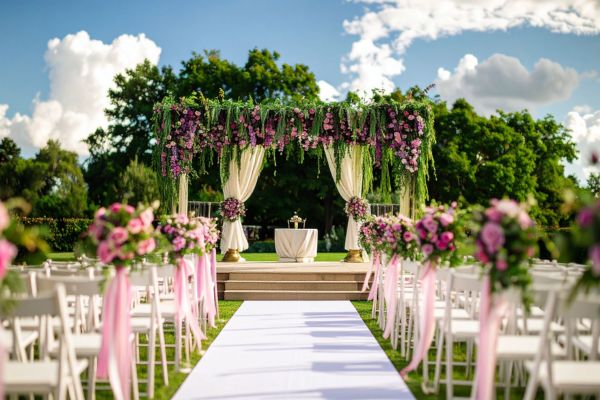
A wedding day moves quickly. One moment you’re adjusting a button or smoothing a veil, and the next you’re walking into a room full of people who love you. Amid the emotion and movement, guests often appreciate something grounding—something that helps them understand what’s happening, when it’s happening, and why it matters. That’s where a wedding order of service template quietly earns its place.
Far from being a stiff or formal document, the order of service can be one of the most personal paper details of your wedding. It sets expectations, reflects the tone of the ceremony, and gently guides everyone through the moment you’ve spent months imagining.
What a wedding order of service really is
At its core, a wedding order of service is a simple guide to the ceremony. It outlines the sequence of events so guests can follow along, especially during longer, religious, or more structured ceremonies. But reducing it to “just a schedule” misses the point.
A thoughtfully written order of service captures the rhythm of the ceremony. It shows where readings fit, when music appears, and how traditions unfold. It can also offer context—explaining rituals, acknowledging contributors, or sharing a short note from the couple. For guests who may be unfamiliar with certain customs, this small piece of paper can turn confusion into appreciation.
Why couples still use an order of service
Some modern weddings skip formal programs altogether, and that can work beautifully. But many couples still choose to use a wedding order of service template because it creates calm. Guests aren’t left wondering what’s next or whether they should stand, sit, or sing along.
There’s also an emotional reason. Weddings are layered with meaning, and not all of it is obvious. An order of service gives space to explain why a particular song was chosen or what a symbolic gesture represents. It becomes part guide, part keepsake—something guests may tuck away and rediscover years later.
How a wedding order of service template helps
Starting from scratch can feel intimidating, especially when you’re already juggling seating plans, vows, and timing. A wedding order of service template offers structure without stealing personality. It gives you a framework, not a script.
Templates help you see the ceremony as a whole. They prompt you to think about flow, pacing, and transitions. More importantly, they prevent accidental omissions. It’s surprisingly easy to forget to credit musicians or mention a reading when you’re focused on the big picture.
Using a template doesn’t mean your ceremony will feel generic. In fact, it often frees you up to be more creative because the essentials are already accounted for.
The typical flow of a wedding ceremony
Most ceremonies, regardless of style, follow a loose narrative arc. There’s an opening that welcomes everyone and sets the tone. This is followed by readings, music, or rituals that deepen the meaning of the occasion. The exchange of vows and rings sits at the heart of it all, before closing remarks and a joyful exit.
A good wedding order of service template reflects this natural progression. It doesn’t rush from one moment to the next, nor does it overwhelm guests with detail. Instead, it offers a clear, steady path through the ceremony, allowing everyone to stay present rather than distracted.
Adapting templates for different ceremony styles
No two weddings feel exactly the same, and your order of service shouldn’t pretend otherwise. A civil ceremony in a city hall will have a very different structure from a traditional religious service or an outdoor humanist celebration.
For religious ceremonies, templates often include hymns, prayers, and responses. In these cases, clarity matters. Guests may need cues for participation, and the order of service becomes almost essential.
For secular or humanist ceremonies, the tone is often more narrative. The template might highlight personal readings, symbolic gestures, or stories shared by the officiant. Here, the language can be warmer and more conversational, mirroring the ceremony itself.
Outdoor and destination weddings benefit from simplicity. Wind, sunlight, and movement can make long programs impractical. A streamlined wedding order of service template works best, focusing on key moments without unnecessary text.
Writing in a voice that feels like you
One of the easiest mistakes couples make is assuming the order of service must sound formal. It doesn’t. In fact, overly stiff language can feel out of place, especially at intimate or modern weddings.
The most memorable orders of service sound like real people wrote them. They might include a short welcome note that feels genuine rather than ceremonial. They explain traditions in plain language. They thank contributors in a way that feels heartfelt, not obligatory.
When adapting a wedding order of service template, read it out loud. If it sounds like something you’d never actually say, rewrite it. Guests notice authenticity, even in small details.
Common elements couples choose to include
While every ceremony is different, certain elements appear again and again because they serve a purpose. An opening welcome helps guests settle in. Listing the sequence of events keeps everyone oriented. Acknowledging readings and music adds context and appreciation.
Many couples also include a brief note of thanks or remembrance. This can be as simple as honoring absent loved ones or expressing gratitude to family and friends. When done with restraint, these moments add depth without turning the program into a speech.
The key is balance. A wedding order of service template should inform without overwhelming. White space, clear headings, and thoughtful wording go a long way.
Design and presentation considerations
Although content comes first, presentation still matters. The order of service is often one of the first printed items guests interact with during the ceremony. Its look quietly sets expectations.
Some couples prefer a folded booklet, especially for longer ceremonies. Others opt for a single card or even a shared sign. Whatever format you choose, legibility is essential. Fonts should be easy to read, and contrast should be strong enough for varied lighting conditions.
Design should support the ceremony, not compete with it. A wedding order of service template works best when it complements the overall aesthetic rather than trying to be the centerpiece.
Making it meaningful without overthinking
It’s easy to get stuck refining every word, especially when emotions are high. But perfection isn’t the goal here. The order of service exists to support a moment that will unfold beautifully whether the wording is flawless or not.
Small imperfections can even make it feel more human. A slightly informal phrase, a personal note, or a warm closing line can turn a simple guide into something memorable.
Trust that guests are there for the experience, not the paper. The template is a tool, not a test.
Conclusion
A wedding order of service template may seem like a minor detail in the grand scheme of planning, but its impact is quietly significant. It brings clarity to the ceremony, invites guests into the meaning behind each moment, and often becomes a keepsake long after the day has passed.
When chosen and adapted thoughtfully, it reflects the couple’s values, the ceremony’s rhythm, and the atmosphere of the day itself. More than a schedule, it’s a gentle companion to one of life’s most meaningful moments—guiding without distracting, informing without intruding, and reminding everyone present why they’ve gathered in the first place.
