

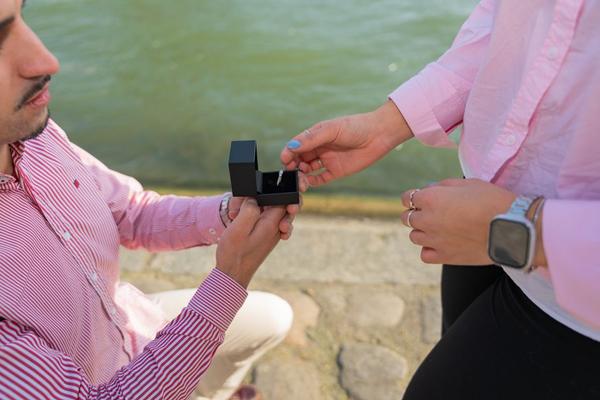
A proposal lasts only seconds, but the story around it is much bigger. There is the nervous wait, the instant one person realises what is happening, the question itself, and the rush of emotion afterwards. Capturing that sequence turns a single photograph into a visual story you can relive for years.
Whether you are a professional photographer, a friend hiding nearby, or a couple planning a discreet camera setup, a proposal photo checklist helps you avoid missing the essential moments. The best proposal story photo ideas combine wide scene-setting images, emotional close-ups, meaningful details, and relaxed portraits once the surprise has settled.
Before the Question: Set the Scene
1. The proposal location
Start with a wide photograph of the location before the couple arrives. Capture the beach, garden, rooftop, restaurant, or familiar street that gives the moment its atmosphere. This becomes the opening image of the story.
2. Meaningful details
Photograph flowers, candles, framed pictures, handwritten notes, picnic items, or any other prepared touches. These details may be overlooked during the excitement, yet they show how much thought went into the plan.
3. The ring before the reveal
If it can be done safely and discreetly, take a close-up of the ring in its box before the proposal. This polished detail shot pairs naturally with the later ring reveal photo.
4. The proposer waiting
Some of the strongest candid proposal shots happen before the other person arrives. Capture the proposer checking the time, taking a breath, holding the box, or watching the entrance.
5. The arrival
Photograph the couple approaching the chosen spot. A longer lens can help the photographer stay hidden while preserving natural body language and the ordinary moment just before everything changes.
During the Proposal: Capture the Essential Sequence
6. The first sign of surprise
The instant someone understands what is happening can be more powerful than the kneeling shot. Look for widened eyes, a hand moving towards the face, a sudden smile, or a pause in their step.
7. The full kneeling shot
Capture both people, the proposal stance, and enough of the location to tell the story. Keep faces, hands, the ring box, and the proposer’s knee visible whenever the angle allows.
8. The question being asked
Take several frames while the proposer speaks. Expressions change quickly, so a short sequence can preserve laughter, tears, surprise, and the emotion behind the words.
9. A close-up of the reaction
After securing the wider frame, focus on the person receiving the proposal. A close-up of tears, laughter, disbelief, or a joyful nod often becomes one of the most treasured engagement moment photos.
10. The answer
Photograph the exact moment the answer is given, whether it is spoken, nodded, or expressed through an immediate embrace. Do not lower the camera after the kneeling frame; the emotional peak often comes next.
11. The ring reveal photo
Capture the ring as it leaves the box and is placed on the finger. Focus on the hands while keeping part of the couple’s expressions visible so the image still feels connected to the moment.
12. The first hug
The first embrace after the answer is usually spontaneous and full of relief. Photograph it wide, then tighter if possible. Closed eyes, tightly held shoulders, and happy tears make the image especially personal.
13. The first kiss
Be ready for the kiss without directing it. A wide shot can include the scenery, while a closer image highlights the couple’s connection. Shift position quickly if the background is distracting.
14. The laughter afterwards
Many couples laugh once the tension disappears. Keep photographing the conversation, teasing, and disbelief that follow. These relaxed images often feel more natural than the expected hero shot.
After the Yes: Complete the Story
15. Looking at the ring together
Photograph both people admiring the ring for the first time. This quiet moment can feel more intimate than a formal hand-forward pose, especially when faces and joined hands remain in the frame.
16. A clear ring close-up
Once the surprise has settled, take a sharp close-up of the ring on the hand. Use natural light, a simple background, and a relaxed pose for an image suited to announcements and albums.
17. A just-engaged portrait
Take one classic portrait with the couple looking towards the camera. Keep the direction simple: stand close, breathe, and enjoy the moment rather than forcing an elaborate pose.
18. A walking photograph
Invite the couple to walk through the location while talking naturally. Movement helps people relax and creates transitional photographs that make the final gallery feel like a complete narrative.
19. A photograph with loved ones
If family or friends are waiting nearby, capture their reveal and reactions. Hugs, cheers, and the couple showing the ring extend the story to the people sharing the celebration.
20. The closing celebration
Finish with an image that signals a joyful ending, such as a champagne toast, sunset silhouette, confetti moment, or the couple leaving hand in hand.
How to Use Your Proposal Photo Checklist
Preparation matters, but flexibility matters more. Share the approximate route, timing, kneeling position, and backup plan with the photographer. Check the light and background in advance, use silent shooting when available, and select a hidden position that still gives a clear view of both faces.
During the proposal, prioritise emotion over technical perfection. Use the checklist as a guide rather than a rigid schedule, and continue shooting through the pauses. The small, unscripted moments between expected images are often the photographs couples treasure most.
Frequently Asked Questions
How many photos should be taken during a proposal?
There is no fixed number. Continuous coverage of the main sequence is more important than a target total. The photographer can later select the strongest frames that tell the story without unnecessary repetition.
What is the most important proposal photo?
The full proposal moment is essential, but the first genuine reaction is often the most emotional. A strong final collection should include both the wider scene and a closer view of the expression.
Can a proposal be photographed without a professional?
Yes. A trusted friend can use a phone or camera from a discreet location, or a device can be placed on a stable tripod. Test the framing, battery, storage, focus, and recording settings beforehand.
Should proposal photos be posed afterwards?
A few relaxed portraits after the proposal are worthwhile, but they should not replace candid proposal shots. Keep posing minimal so the couple can remain present and enjoy being newly engaged.
Capture the Whole Moment, Not Just the Question
The strongest proposal galleries preserve more than the yes. They capture anticipation, surprise, tenderness, laughter, and celebration. Use these proposal story photo ideas as a flexible guide to create a natural, emotional sequence from the opening scene to the final embrace.
