

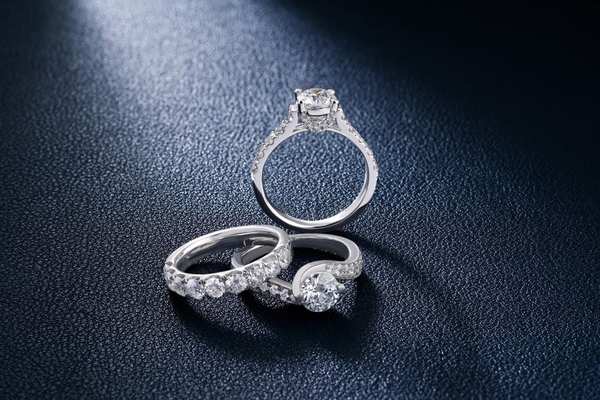
Choosing diamond color for engagement rings is less about chasing the highest grade and more about understanding what your eye will notice once the stone is set. A D-color diamond sits at the top of the traditional grading scale, but it is not automatically the smartest buy for every ring. Metal color, diamond shape, carat size, lighting, and personal preference all affect how visible warmth appears. For many shoppers, strong value sits a few grades below the colorless range, where the visual difference can be subtle.
How the diamond color grading scale works
The GIA diamond color chart runs from D to Z. It measures the relative absence of color in diamonds within the normal color range. D is colorless, while grades farther down the scale show progressively more yellow, brown, or sometimes gray body color. Diamonds with stronger or different hues may be graded separately as fancy-color diamonds.
The diamond color grades are grouped as D-F colorless, G-J near colorless, K-M faint, N-R very light, and S-Z light. Laboratory graders assess color under controlled conditions and compare stones with master diamonds of known color. Differences between adjacent grades can be extremely subtle once a diamond is viewed face-up in a finished ring.
Colorless does not always mean visibly better
A D, E, or F diamond offers the least visible body color and suits buyers who want a crisp, icy-white look. The trade-off is cost. Moving from a near colorless diamond to a colorless grade may raise the price without creating a dramatic face-up change. Color is best judged as part of the whole ring, not simply as a letter on a report.
Where engagement ring buyers often find strong value
For many engagement rings, G through J deserves close attention. These grades are near colorless and can look very white in everyday viewing. G or H is a popular middle ground for buyers who want a bright white appearance without paying purely for top-tier color rarity.
I or J can also offer attractive value, especially in yellow or rose gold. A little warmth may blend naturally with the metal rather than standing out. The best diamond color is the grade that gives you the appearance you want while preserving budget for cut quality, size, or setting design.
A useful buying strategy is to compare two or three adjacent grades in similar diamonds. If an H and an I of similar shape, size, and cut look essentially the same to you face-up, the lower grade may be the better purchase. Side-by-side comparison is more useful than assuming every grade difference will be obvious.
Why metal color changes what you notice
The setting acts like a visual frame around the diamond. White gold and platinum create a cool background, so warmth in the center stone may be easier to notice. Yellow and rose gold can make a slightly warmer diamond feel more harmonious because the surrounding metal contributes warm reflections.
A practical compromise is a yellow or rose gold band with white-metal prongs or a white-metal head. The warmer band gives the ring its overall character, while white prongs can reduce warm reflection immediately around the center stone. Buyers comparing this option may also want to review an engagement ring settings guide before choosing the mounting.
A practical example
Imagine two shoppers choosing a one-carat round diamond. One wants platinum and an icy, minimalist setting; the other wants an 18k yellow gold solitaire. The platinum buyer may prefer G or H because a white appearance is central to the design. The yellow-gold buyer may be comfortable with I or J, since modest warmth can be less noticeable against the metal. Neither choice is inherently better; each matches color to the finished ring.
Shape, size, and cut can influence color appearance
Color does not present exactly the same way in every diamond. Shape and cutting style influence face-up appearance, so two diamonds with the same laboratory color grade may not look identical. Carat size can matter as well: in a larger stone, body color may be easier to observe than in a smaller one.
Cut quality should not be sacrificed merely to move up a color grade. Brightness, sparkle, and light return are major parts of what people notice. With a fixed budget, many buyers will get a more satisfying ring by balancing color with strong cut performance instead of paying heavily for a grade difference they can barely see. A diamond carat size guide can also help when comparing how size and color interact.
How to shop for diamond color with confidence
Start with a grading report from a respected independent laboratory and confirm the color grade before comparing prices. Then view the diamond in lighting that resembles real life. Ask to see the diamond in neutral indoor light and, if possible, near daylight. Look at it face-up, from the side, and against the metal color you plan to wear.
Focus on visible appearance rather than prestige. If you cannot reliably tell the difference between two adjacent grades, paying more for the higher grade may not improve the ring for you. It also helps to consider clarity at the same time; a diamond clarity guide can provide useful context when balancing the 4Cs within one budget.
Frequently asked questions
What is the best diamond color for an engagement ring?
There is no single best grade for everyone. D-F suits buyers who want the most colorless appearance, while G-H often provides a strong balance of whiteness and value. I-J can also work well, especially with yellow or rose gold settings or for shoppers who do not mind a hint of warmth.
Is a G-color diamond considered colorless?
No. On the GIA scale, G falls in the near-colorless range, which runs from G through J. Even so, a well-cut G diamond can appear very white to many people when viewed face-up in a ring.
Can you see the difference between H and I color?
Sometimes, but not always. The difference between adjacent diamond color grades is subtle, and visibility depends on the stone, size, shape, setting, lighting, and observer. Side-by-side comparison is the most useful way to decide whether the higher grade matters to you.
Does yellow gold allow you to choose a lower color grade?
Often, yes. Warm metal can make slight yellow or brown tones feel less noticeable or more visually integrated. That does not mean every lower grade will look the same, so compare the diamond with the intended setting before buying.
Choosing the right color without overspending
Diamond color for engagement rings should be judged in context. The grading letter matters, but it is only one part of the finished look. Use the diamond color chart to understand the scale, then compare real stones with your preferred metal, shape, and size. For many buyers, a near colorless diamond offers a sweet spot: a bright appearance and more flexibility to spend on cut, carat weight, or the setting. The smartest choice is the lowest color grade that still looks beautifully white enough to you in the ring you plan to wear.
