

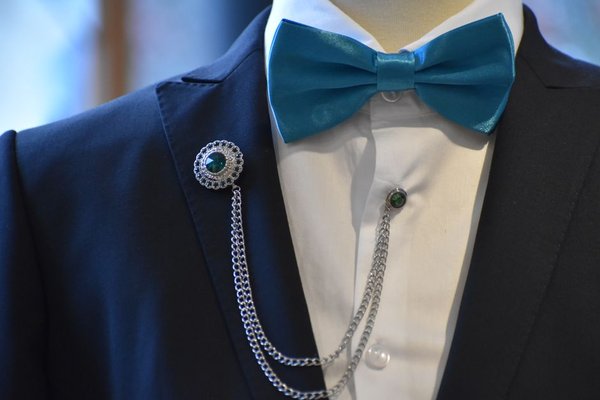
A wedding suit can fit beautifully and still feel unfinished. Usually, the difference is in the details: a tie that frames the face, a pocket square that lifts the jacket, and shoes that make sense with the rest of the outfit. Groom suit accessories should bring those elements together without making the groom look overloaded.
Start with the wedding’s dress code, the suit colour and the shirt. Then choose accessories in layers. Think about what draws the eye first, what adds personality and what must simply work all day. That approach is more reliable than buying a matching accessory set and hoping everything falls into place.
Let the Dress Code Set the Boundaries
For black tie, traditional tuxedo accessories include a black bow tie, appropriate formal footwear and often a simple white pocket square. Tuxedo trousers typically use side adjusters or braces rather than a leather belt. A necktie, bright novelty socks or a casual watch may look out of place.
A standard wedding suit is more flexible. A silk wedding tie works well for formal ceremonies, while a textured tie or softer colours can feel right for a daytime event. An outdoor venue does not automatically mean casual dress, so follow the invitation rather than assumptions about the setting.
Choose a Tie or Bow Tie That Suits the Jacket
The tie sits near your face in almost every portrait, making it one of the most important groom accessories. A solid colour or restrained pattern is often easier to coordinate than a large, high-contrast print. Silk adds a refined finish; knitted or lightly textured fabrics can make a less formal outfit feel relaxed but considered.
Check proportions. An unusually wide tie can overwhelm a slim lapel, while a tiny knot can look lost beneath a broad shirt collar. Try the complete combination in a mirror, including any waistcoat. A bow tie can work with a regular suit, too, particularly for a classic or playful wedding style.
Coordinate the Pocket Square Without Matching It Exactly
A pocket square should complement the tie, not reproduce it. With a patterned tie, pick up one quieter colour in the square. With a plain tie, a small pattern can add interest. White linen is a dependable choice for a clean, formal appearance, especially against navy, charcoal or black tailoring.
The fold matters as much as the fabric. A straight fold looks crisp; a soft puff looks more relaxed. Keep the visible portion modest so it frames the lapel rather than competing with the boutonniere. Practise pocket square folds before the wedding morning, when the photographer and family are already waiting.
Make Cufflinks and Watches Feel Personal
Groom cufflinks are a discreet way to include a family keepsake, initials or another meaningful detail. First, check the shirt: cufflinks require compatible cuffs, usually French or double cuffs. A standard button cuff does not become cufflink-ready simply because you have bought a pair.
Silver-tone and gold-tone designs both work; restraint is more useful than perfect metal matching. If you wear a watch, a relatively slim dress watch tends to sit beneath the shirt cuff more comfortably than a chunky sports watch. A watch is optional, particularly with very formal evening wear.
Decide Between a Belt, Suspenders and Side Adjusters
For a suit worn with a leather belt, choose one close to the shoes in colour and formality. The buckle should be unobtrusive. There is no need for every shade of brown to match perfectly, but a casual, distressed belt can undermine a polished outfit.
Suspenders, also called braces, offer another option. Button-on styles can look especially neat with tailored trousers that have the proper buttons. Wear a belt or suspenders, not both: they perform the same job. Some trousers are cut to stay in place with side adjusters alone.
Give the Boutonniere, Shoes and Socks Equal Attention
Boutonniere
A boutonniere traditionally sits on the left lapel. It can echo the wedding flowers without duplicating the entire bouquet. A small bloom or compact arrangement often looks better than something heavy that bends the lapel. Ask the florist how it will attach, especially if the jacket fabric is delicate.
Shoes and Socks
Black leather shoes are a dependable partner for very formal dark tailoring. Brown shoes often complement navy and medium-grey suits when the dress code permits. For a tuxedo, follow the footwear conventions of black tie rather than assuming ordinary office shoes will do.
Wear the shoes at the final trouser fitting. A different heel or sole can change how the hem falls. Break them in gently before the wedding, and choose dress socks long enough to cover your calves when seated. Contrasting socks can be fun, but they should still suit the occasion.
Build a Look That Works in Photographs and Real Life
Imagine a groom in a navy suit at an autumn afternoon wedding. A muted sage tie, white linen square, small white-and-green boutonniere and understated silver cufflinks give the outfit a coherent palette. Dark brown shoes and a similarly toned belt finish it without forcing every piece to match.
Lay all your accessories beside the suit in daylight and take a phone picture. This simple test reveals clashing undertones and overly busy patterns more clearly than viewing each item separately. Use one principal accent colour, then let most other pieces remain neutral.
Do a Full Dress Rehearsal
At the last fitting, wear everything together. Sit, walk, raise your arms and fasten the jacket. Check that the knot does not crowd the collar, the cufflinks do not catch, and the boutonniere does not distort the lapel. Looking comfortable matters just as much as looking coordinated.
On the wedding morning, keep spare socks, necessary cufflink parts and a suitable garment-care kit nearby. Ask a trusted person to straighten the pocket square and check the flower before portraits. Those practical touches prevent small distractions at precisely the moment you want to enjoy yourself.
Frequently Asked Questions
What accessories should a groom wear with a suit?
A tie or bow tie, pocket square, dress shoes and suitable socks are common starting points. Add cufflinks, a watch, boutonniere, belt or suspenders according to the shirt, trousers and dress code. Not every accessory is necessary.
Should a wedding tie and pocket square match?
They should coordinate, but identical prints or fabrics are not required. Repeating a small colour from the tie in the square usually creates a more natural result than a matching set.
Can a groom wear both a belt and suspenders?
Usually not. Both support the trousers, so choose one. Properly fitted trousers with side adjusters may need neither.
Do the groom’s accessories need to match the groomsmen?
No. Keeping colours and formality related creates a unified group look. The groom can use a different tie, flower or sentimental detail to stand out subtly.
Finish the Outfit, Then Stop Adding
The best groom suit accessories support the suit and the person wearing it. Choose the pieces that fit the occasion, work together and feel comfortable through the ceremony and reception. Once the outfit looks balanced, another accessory is rarely the missing ingredient.
