

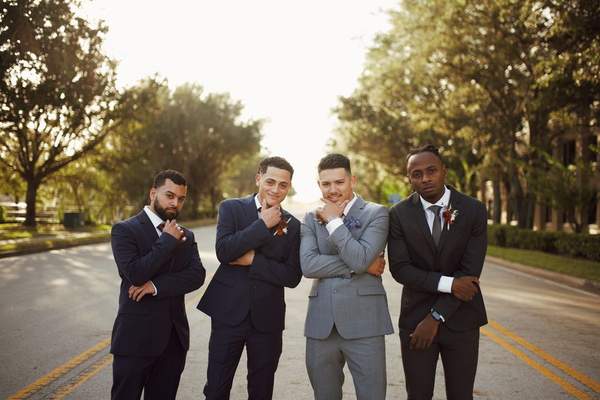
Great groomsmen suits make a wedding party look connected without turning everyone into copies of one another. The secret is deciding what should match, what can vary and which details deserve the budget. A thoughtful plan also helps attendants with different builds, preferences and locations feel comfortable.
Start with the wedding’s formality, setting and color palette. Then choose suits, settle the cost and communicate expectations. That order prevents the familiar problem of six people buying slightly different versions of “navy.”
Start With the Wedding’s Dress Code
Wedding party suits should feel appropriate beside the couple’s outfits and within the venue. A black-tie event typically calls for tuxedos, while formal or cocktail weddings allow more flexibility with dark suits. A relaxed garden celebration may suit softer tailoring and lighter colors, but casual should still look intentional.
Consider comfort. An outdoor summer ceremony calls for different fabrics than a winter evening reception. Think about travel between venues, time spent in sunlight and whether the party will walk on grass. Practical details affect how confidently everyone wears the outfit.
Pick Groomsmen Suit Colors With a Clear Plan
Navy, charcoal and medium grey are versatile foundations. Tan, soft blue, brown and muted green can work for daytime ceremonies or less traditional settings. Rather than choosing a shade in isolation, compare it with the venue, flowers, other wedding-party outfits and the groom’s suit.
Decide Between Matching and Mixing
Exact matching means ordering the same suit style and color from one supplier. Tonal coordination uses related shades, such as charcoal and medium grey. Intentional mixing allows different colors under a shared rule, perhaps navy and grey suits with white shirts and matching ties.
Avoid accidental near-matches. “Any navy suit” sounds simple, but navy can look purple, grey or almost black depending on fabric. If exact matching matters, specify a product. Otherwise, embrace deliberate variation rather than hoping different retailers sell identical shades.
Use the Wedding Palette as a Reference
Matching the floral colors precisely is rarely necessary. For a sage-and-cream wedding, navy suits with subdued green ties may feel more balanced than green jackets on every attendant. Compare swatches in daylight because online photos and indoor lighting can distort undertones. A groomsmen suit color combinations guide can help narrow down a palette.
Let the Groom Stand Out Naturally
Coordinated groomsmen do not need to dress exactly like the groom. A different tie, waistcoat, boutonniere or contrasting suit shade can create a focal point. Usually one or two differences are enough.
Picture a late-spring wedding with five attendants in mid-blue suits, white shirts and muted olive ties. The groom chooses deeper navy and an olive pocket square. Everyone belongs in the same visual story, but the groom is immediately recognizable. This is more effective than giving every attendant a completely different outfit.
Prioritize Fit Over Perfect Uniformity
Even high-quality groomsmen formalwear looks awkward if jackets pull, sleeves are too long or trousers bunch around shoes. Choose a consistent silhouette, such as single-breasted jackets with gently tapered trousers, but allow each wearer to find a comfortable size.
Check the Details at the Fitting
Jacket shoulders should sit smoothly, and the wearer should be able to button the coat and sit without strain. A little shirt cuff can show beyond the jacket sleeve. Trousers should fall neatly over shoes rather than gathering in large folds.
Do not force an extremely slim cut on every body type. Personalized alterations create a more polished wedding party than identical measurements could. A wedding suit fit guide helps attendants check sleeves, shoulders and trouser length before the final fitting.
Choose Fabrics That Suit the Day
Wool and wool blends come in different weights and finishes. Cotton and linen blends may suit warmer celebrations, although they wrinkle more readily. Finish matters too: a shiny blue jacket beside a matte blue suit can look mismatched. Agree on fabric appearance as well as shade.
Rent, Buy or Use Suits People Already Own?
Renting makes sense for a style attendants are unlikely to wear again. Buying may offer better value when the suit will be useful for work or future celebrations. Neither option is always cheaper, so compare complete costs rather than advertised starting prices.
Include shirts, shoes, ties, alterations, shipping, deposits and cleaning or late-return fees. Providers differ in fitting, exchange and return policies. A groomsmen suit rental guide can help compare the details.
A mixed approach works for some semi-formal weddings. Attendants might wear their own charcoal suits and purchase the same shirt and tie. If one person needs a rental, check fabric samples rather than trusting a screen to confirm a match.
Set a Realistic Budget and Explain It Early
Who pays for groomsmen suits varies by couple and tradition. Do not assume everyone can absorb the same cost. Tell attendants the likely total before asking them to commit, and consider contributing if the selected look is unusually expensive.
Separate essentials from preferences. A consistent suit color may be essential, while identical shoe brands probably are not. Allowing smart shoes people already own can lower costs without spoiling the overall appearance.
Keep Orders and Fittings Organized
One shared checklist beats a long stream of group messages. Identify the approved suit or palette, shirt, tie, shoes, supplier, expected cost and deadlines. Give one person responsibility for confirming everyone has ordered the correct pieces.
Begin planning several months ahead, particularly for a large or geographically scattered party. Check lead times directly with suppliers and leave room for exchanges and tailoring. Everyone should have an outfit in hand well before the ceremony.
Ask attendants to try on the entire outfit, including shoes, roughly a month in advance if possible. A group photo in natural light can reveal mismatched tones or accessories that individual mirror checks miss.
Use Accessories for a Cohesive Finish
Consistent shirts offer an easy visual foundation. Ties, pocket squares and boutonnieres can echo the wedding palette without copying it. Shoes and belts should have comparable formality, even when brands differ. Matching watches, socks and tie clips matters less than comfortable tailoring.
Frequently Asked Questions
Do all groomsmen suits have to match?
No. Identical suits are one option, but coordinated colors, consistent shirts and shared accessories can look equally polished. Make variation intentional.
What are the safest groomsmen suit colors?
Navy, charcoal and medium grey work across many formal and semi-formal weddings. Lighter neutrals suit some daytime or outdoor celebrations.
Should the groom wear the same suit as the groomsmen?
He can, though a contrasting tie, boutonniere, waistcoat or suit shade helps distinguish him. The difference can be subtle.
How early should groomsmen order their suits?
Start decisions several months ahead and follow the supplier’s lead times. Allow time for delivery, exchanges, alterations and a complete fitting.
A Cohesive Look Starts With Clear Choices
The best groomsmen suits balance shared style with individual comfort. Decide on formality and color first, make fit and cost part of the conversation, and communicate the plan early. When everything comes together, the wedding party looks confident, the groom stands out and nobody wonders whether their suit is the right shade of blue.
